What Happens When a Power Transformer Arrives On Site: Offloading, Setting, and Assembly
November 10, 2026

A power transformer is often the most expensive and hardest-to-replace piece of equipment on a substation or energy project. It may have been ordered many months in advance, and the day it arrives can make or break the schedule. If the offload goes wrong, the setback is measured in months, not days.
Since 2022, Veteran Crane has supported more than 400 transformer projects across 44 states and more than 800 heavy equipment offloads across 46 states. This guide explains what actually happens when a transformer arrives, how it gets from the trailer to its pad, what assembly involves, and how project teams can plan for a smooth delivery day.
Here is what we will cover:
- The three phases of transformer delivery
- How transformers are offloaded, including crane picks and jack-and-slide methods
- What happens before the unit moves
- How the transformer is set and assembled
- Substation safety requirements
- A planning checklist for project managers
What happens when a power transformer arrives on site?
A transformer delivery happens in three phases: receiving and inspection, offloading and setting the unit on its pad, and assembly (often called dressing). Each phase depends on the one before it, so planning all three together keeps the job on schedule.
- Receiving and inspection. The delivery is checked before anything moves.
- Offloading and setting. The transformer is lifted or slid from the trailer onto its foundation.
- Assembly. Components removed for shipping are reinstalled so the unit can be filled, tested, and energized.
Why is transformer delivery day so high stakes?
Transformer delivery day is high stakes because a damaged or delayed unit is costly and slow to replace. Many large transformers are built to order, so there is rarely a spare sitting in a warehouse.
Several pressures stack up on the same day:
- Long lead times. A replacement unit may take a long time to build and ship.
- Outage windows. On utility and replacement projects, work often must fit inside a scheduled outage.
- Idle costs. Heavy-haul trucks, escorts, and crews waiting on site add cost by the hour.
- Downstream trades. Electrical, testing, and commissioning crews are scheduled around the set date.
That is why experienced teams treat the offload as a planned critical lift, not a routine delivery.

How is a power transformer offloaded?
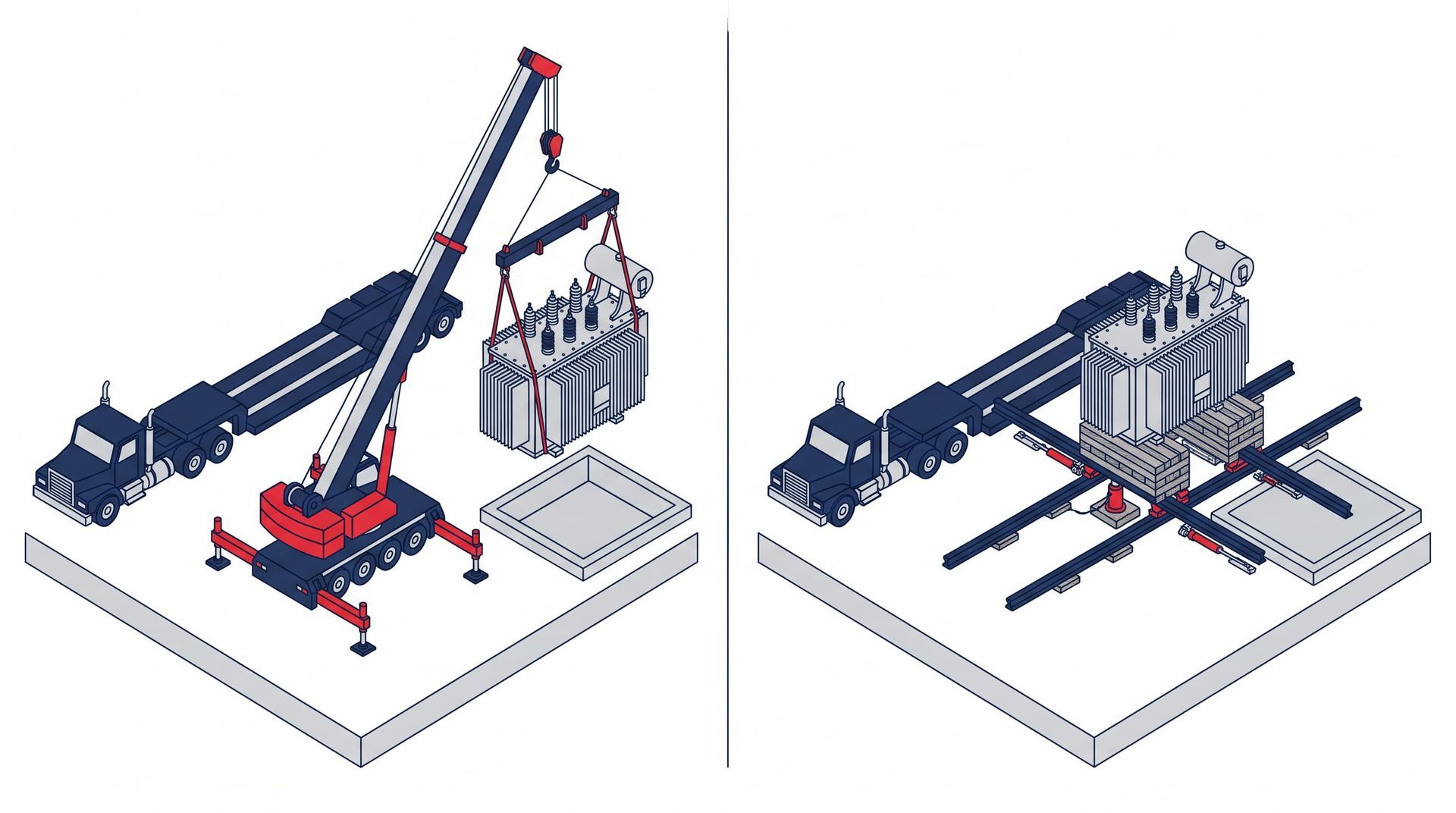
A power transformer is offloaded either by crane or by jacking and sliding it from the trailer onto its foundation. The right method depends on the unit's weight, site access, ground conditions, and nearby energized equipment.
Offloading with a crane
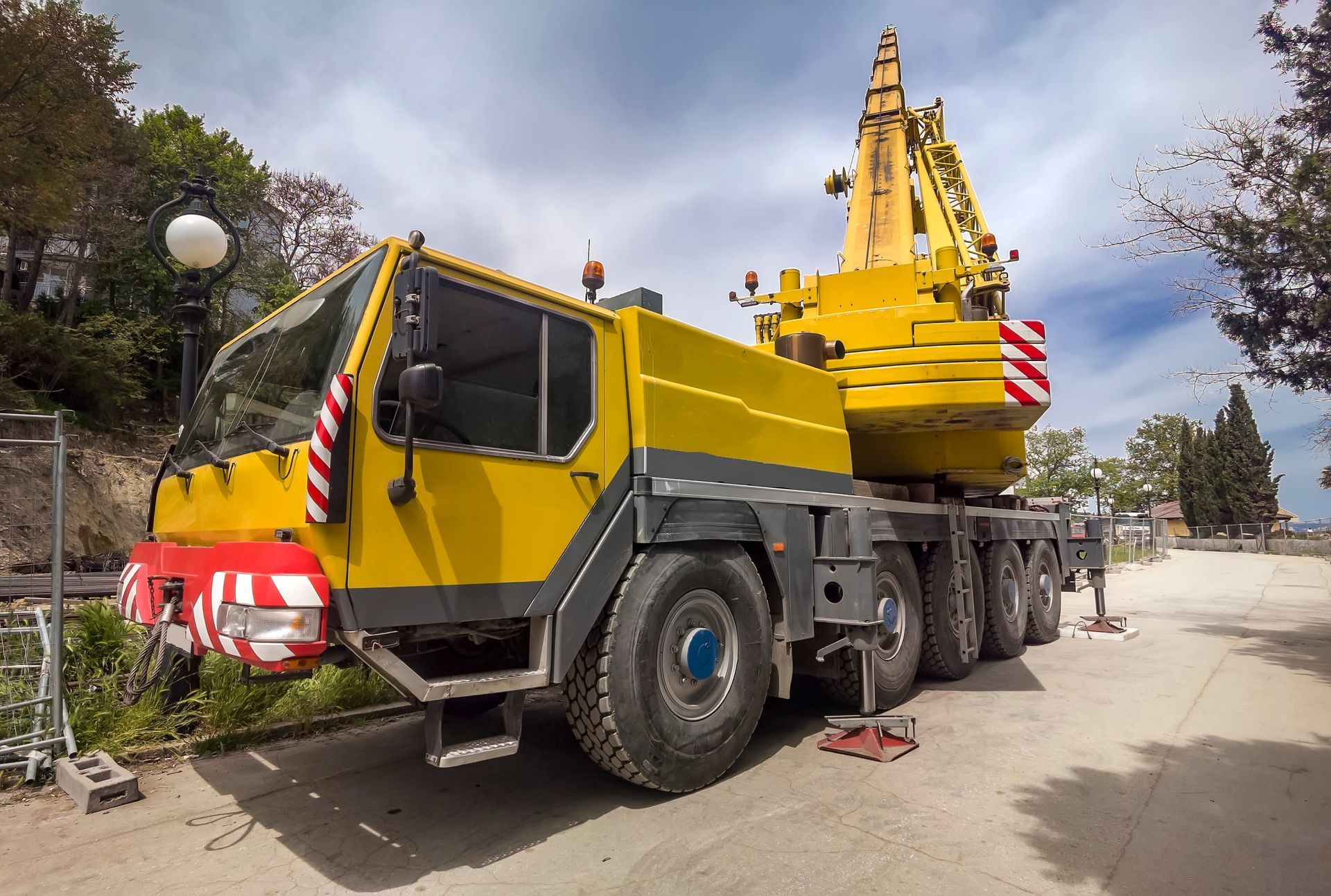
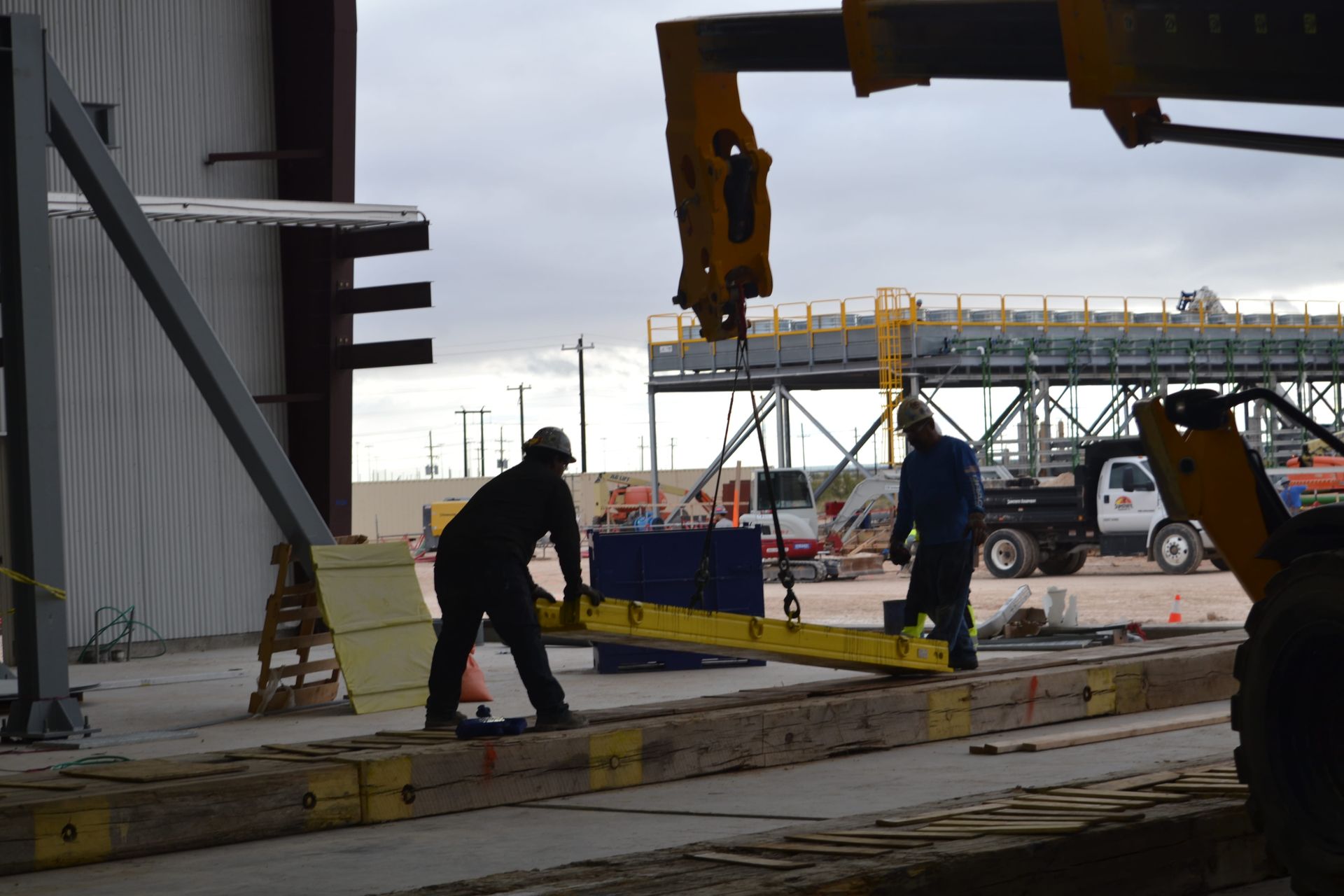
In a crane pick, the transformer is lifted from the trailer and set directly on its pad. The crane is selected through a lift plan, not by weight alone.
A lift plan typically accounts for:
- The unit's shipping weight and center of gravity, taken from the manufacturer's documentation
- The designated lifting points on the transformer tank
- The lift radius from the crane to the trailer and to the pad
- Ground bearing capacity and crane mat requirements
- Clearance from overhead lines and energized equipment
- Rigging configuration, such as spreader beams that keep slings in the correct position
Getting the center of gravity right is critical. Transformers are rarely balanced, and an uneven load can shift or tilt during the pick. Learn more about operated crane rental and qualified rigging.
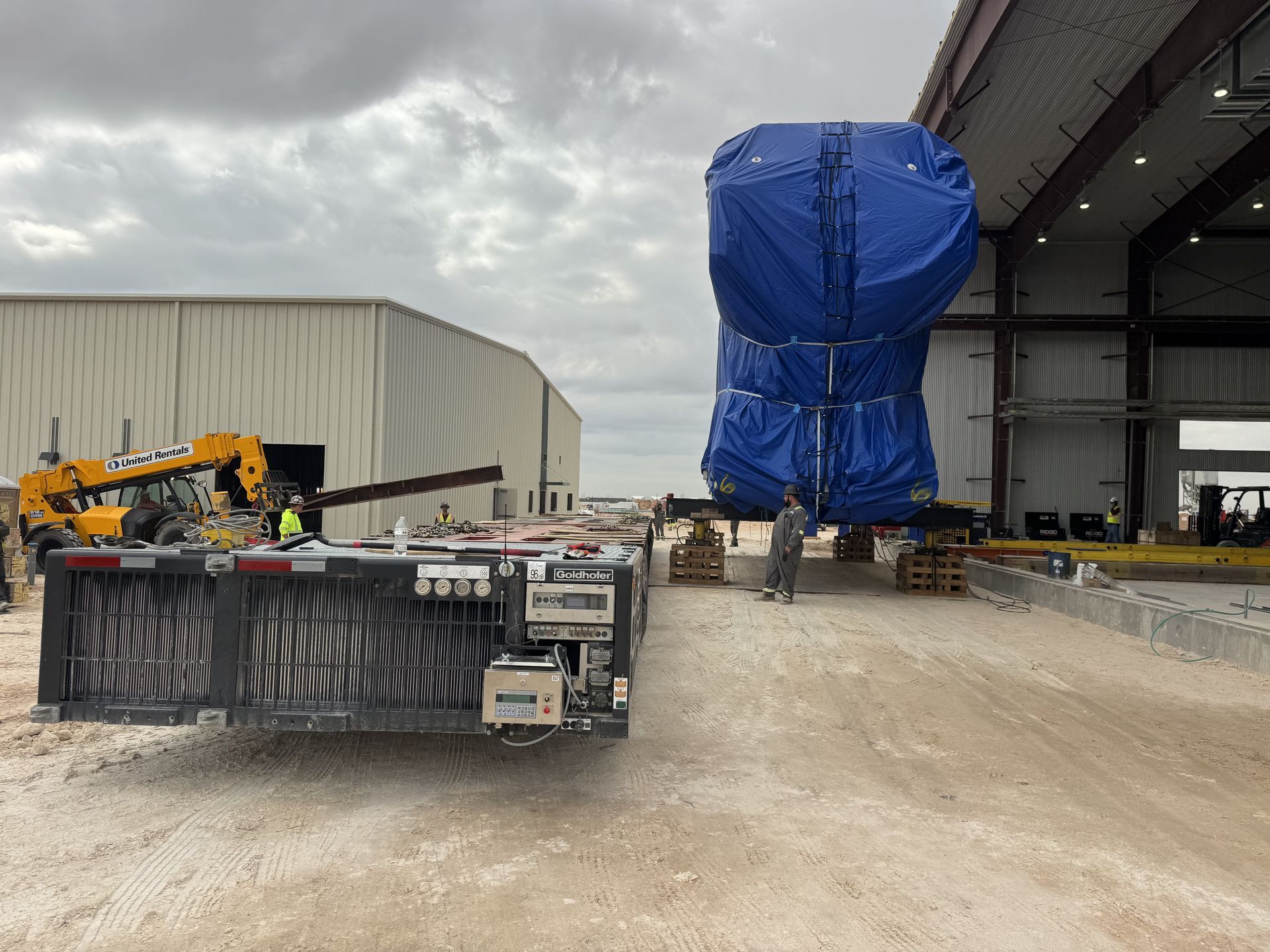
Offloading by jack and slide
In a jack-and-slide offload, the transformer is raised with hydraulic jacks, supported on cribbing, and moved horizontally along a skid or slide system onto its foundation. No overhead lift is required.
This method is often considered when:
- A crane cannot get close enough to the pad
- Overhead lines or energized equipment limit boom movement
- The site is too tight for a crane and its outriggers
- The unit is too heavy for a practical crane setup on that site
How do you choose the right offload method?
The right offload method is the one that moves the unit safely with the least risk to the transformer and the site. That decision should be made during planning, after a site review, not on delivery day.
Key questions include:
- Can a crane be positioned close enough, on stable ground?
- Are there overhead lines or energized bus nearby?
- Does the trailer have a clear path to the pad?
- What does the manufacturer's documentation allow?
What should be checked before a transformer is offloaded?
Before a transformer moves, the receiving team should confirm the unit arrived in good condition and the site is ready to accept it. Problems found after the offload are much harder to sort out with the shipper and manufacturer.
Typical pre-offload steps include:
- Review shipping records, including any impact recorder data, with the owner or manufacturer's representative.
- Walk around the unit to look for visible damage, leaks, or shifted cargo.
- Confirm the foundation is complete and ready, and that the unit's orientation is marked.
- Verify the lift plan or jack-and-slide plan matches site conditions that day.
- Hold a pre-task meeting so every crew member knows their role.
The owner or manufacturer usually decides whether the unit is accepted. The crane and rigging crew's job is to make sure the site, equipment, and rigging are ready to move it safely.
How is the transformer set on its pad?
The transformer is set on its pad by aligning it to the foundation markings and the required orientation before it is lowered or slid into final position. Precise placement matters because bus connections, conduit, and anchoring are designed around that exact location.
The set usually involves:
- Confirming the correct orientation of the high-voltage and low-voltage sides
- Lowering or sliding the unit in controlled increments
- Checking final position against the foundation layout
- Leaving the unit stable and ready for anchoring and assembly by the responsible trades
What is transformer assembly or dressing?

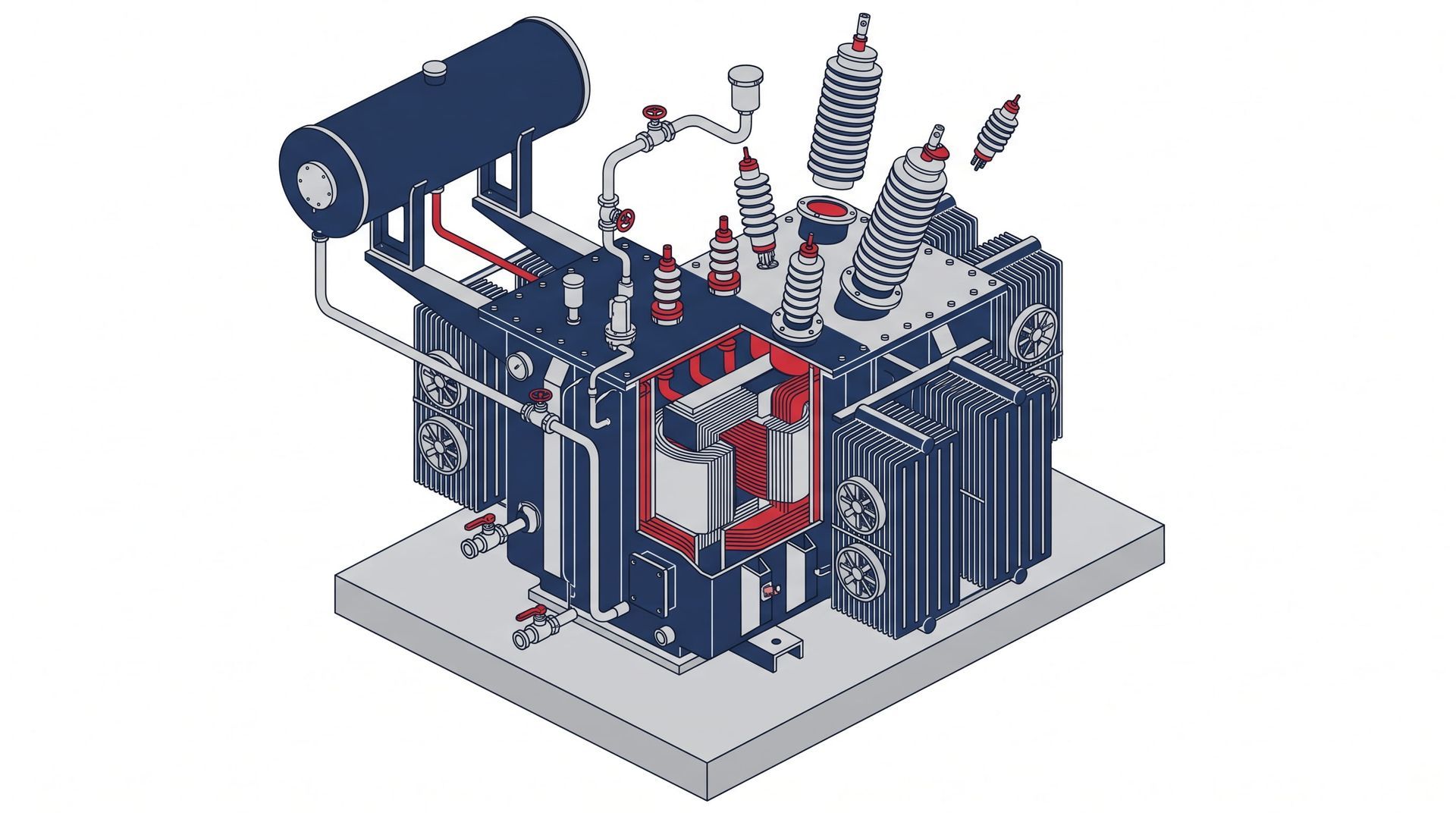
Transformer assembly, often called dressing, is the reinstallation of components removed for shipping. Large transformers usually travel without some external parts so the tank can meet transport size and weight limits.
Components that may be shipped separately include:
- Radiators or cooling assemblies
- Bushings
- The conservator tank
- Surge arresters
- Cooling fans and related hardware
Who does what during assembly?
The manufacturer's or owner's field service team typically leads the technical assembly. The crane and rigging team supports them by lifting and positioning heavy components safely and on schedule.
Oil processing, electrical testing, and final connections are handled by qualified specialists and licensed contractors. Veteran Crane provides the crane, rigging, and equipment support that keeps those teams moving.
Assembly sites also need more than a crane. Depending on the job, that can include:
- Manlifts for work at height
- Forklifts and telehandlers for moving parts and crates
- Dumpsters for packaging and debris
- Portable restrooms for longer jobs
What safety rules apply to crane work in substations?
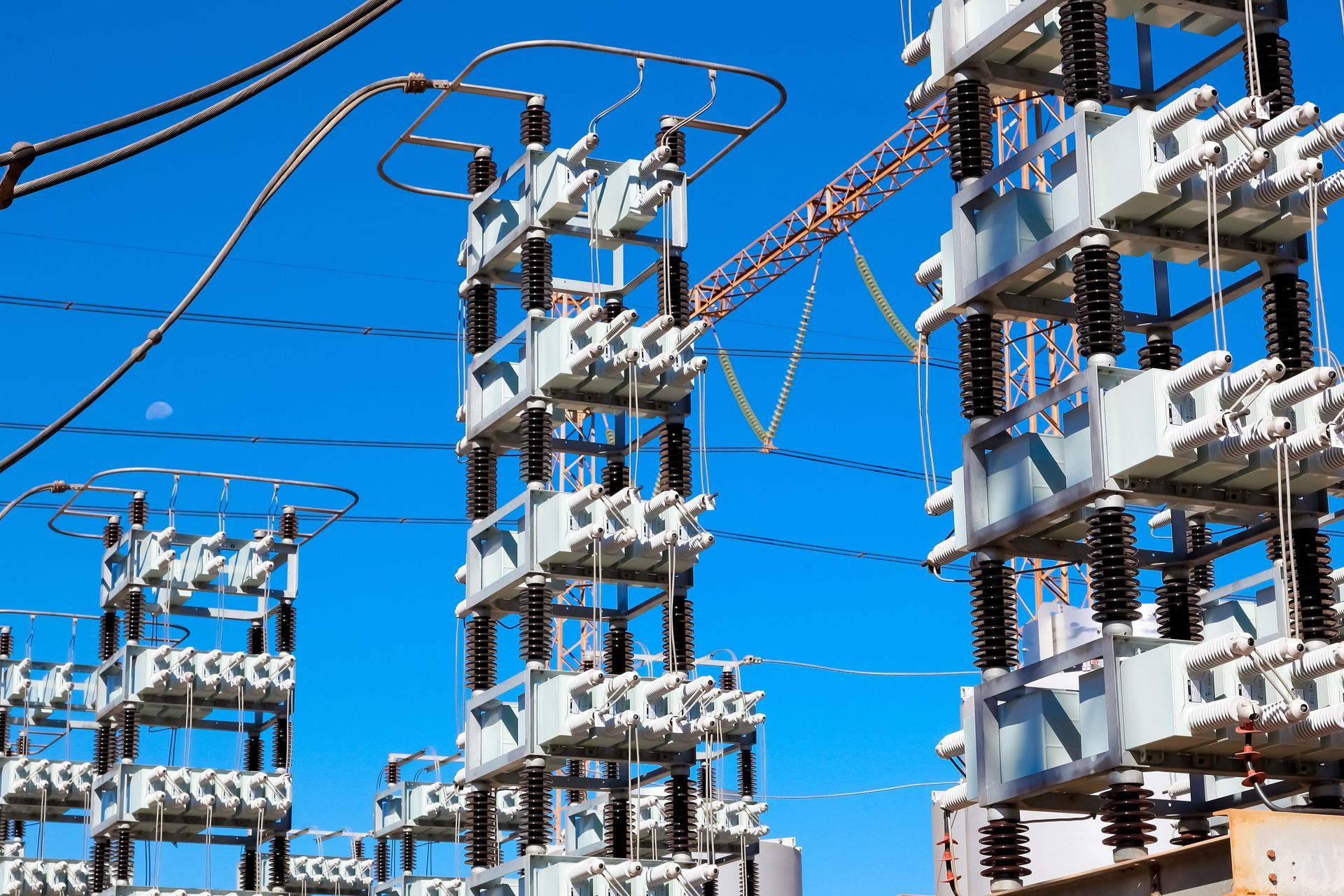
Crane work in and around substations falls under OSHA's Cranes and Derricks in Construction standard (29 CFR 1926 Subpart CC). The biggest hazard is contact with, or arcing from, energized lines and equipment.
Key requirements and practices include:
- Power line clearance. Under 29 CFR 1926.1408, if a crane could get within 20 feet of a power line up to 350 kV, the employer must de-energize and ground the line, keep the crane outside 20 feet with encroachment precautions, or work to the minimum distances in OSHA's Table A. For lines over 350 kV, the 20-foot distance becomes 50 feet.
- Non-conductive tag lines when tag lines are used near power lines.
- Ground conditions. 29 CFR 1926.1402 requires ground that is firm, drained, and graded well enough to support the crane.
- Qualified riggers for rigging work covered by the standard.
- A written lift plan and a pre-task briefing for every critical pick.
Utility owners often have additional site-specific safety rules. Those rules should be reviewed during planning.
How can project managers plan a smooth transformer delivery?
The best way to
plan a smooth transformer delivery is to lock in the method, equipment, and responsibilities well before the truck arrives. Most delivery-day problems trace back to a missed detail in planning.
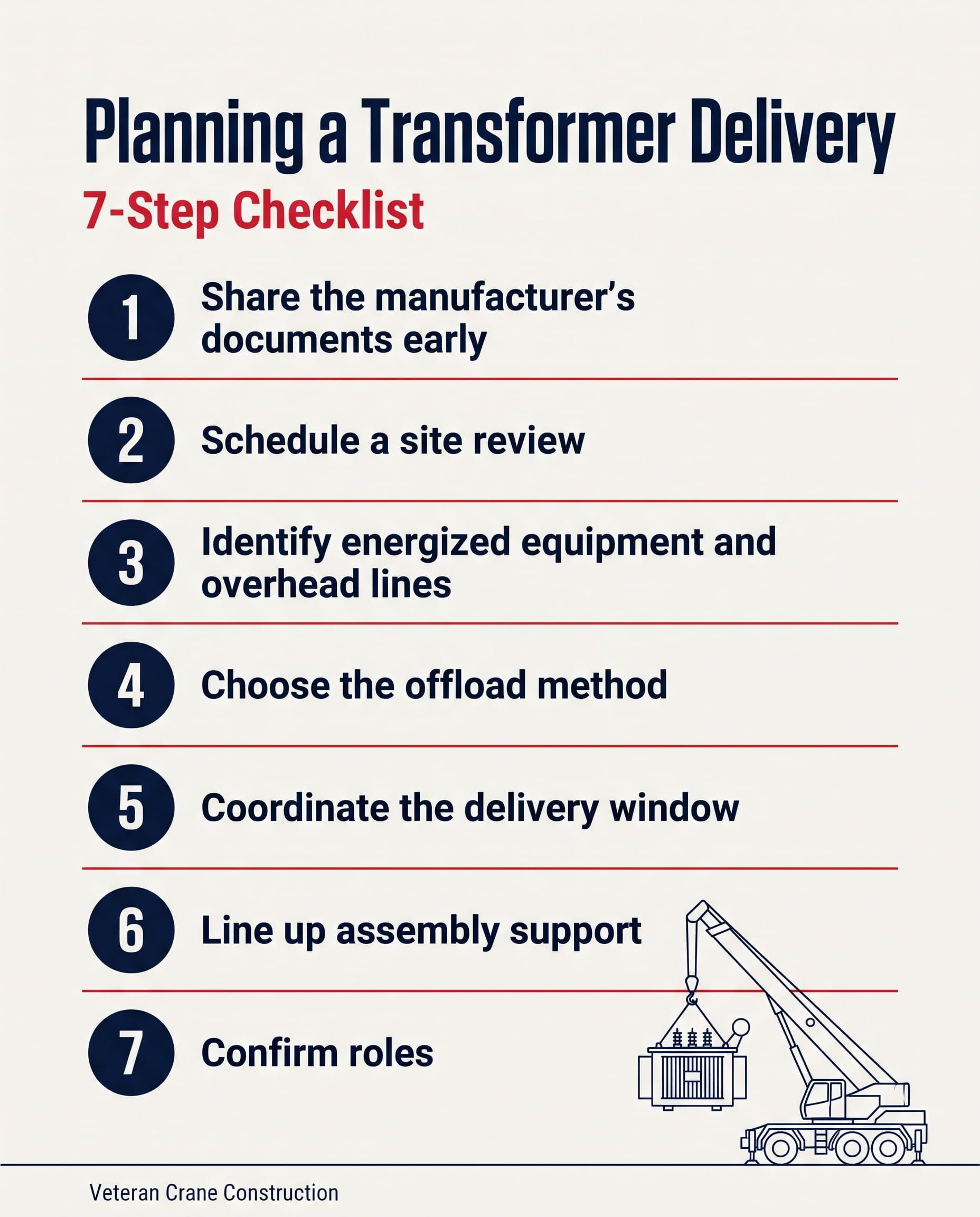
Use this checklist:

- Share the manufacturer's documents early.
Shipping weight, center of gravity, lifting points, and assembly instructions drive every other decision.
- Schedule a site review. Confirm access roads, turning radius, crane setup area, and ground conditions.
- Identify energized equipment and overhead lines. Plan clearances and any outage needs.
- Choose the offload method.
Decide between a crane pick and jack and slide based on the site, not habit.
- Coordinate the delivery window.
Align the heavy-haul arrival with crane availability to avoid idle trucks and crews.
- Line up assembly support.
Book manlifts, forklifts, and other equipment for the assembly crew at the same time.
- Confirm roles.
Make it clear who accepts the unit, who directs the lift, and who leads assembly.
Why use one partner for offloading and assembly support?
Using one partner for offloading, rigging, equipment, and site support reduces handoffs, and handoffs are where schedules slip. When the offload crew and the assembly support crew are the same team, there is no gap between delivery and dressing.
Veteran Crane supports transformer projects from offload through assembly with:
- Operated cranes and qualified rigging
- Equipment rental, including forklifts, manlifts, and telehandlers
- Trucking and hauling coordination
- Jobsite support such as debris removal
- Software-driven scheduling and 24-hour support
That combination is why contractors often
bring us in for one scope and then
expand our role.
Plan your next transformer delivery with Veteran Crane
If you have a transformer delivery, replacement, or assembly coming up, bring us in early. Send us your site plan, delivery date, and the manufacturer's documentation, and our team will help you plan the offload and support the job through assembly.
Call
833-79-CRANE or
request a quote today.
Frequently Asked Questions
How do you offload a power transformer?
A power transformer is offloaded either with a crane pick or by jacking and sliding it from the trailer onto its foundation. The method is chosen during planning based on the unit's weight, site access, ground conditions, and nearby energized equipment.
What does jack and slide mean for transformers?
Jack and slide is a method of moving a transformer without lifting it overhead. The unit is raised with hydraulic jacks, supported on cribbing, and slid along a skid or rail system into position, which is useful when a crane can't reach the pad or overhead clearance is limited.
What is transformer dressing?
Transformer dressing is the reinstallation of components removed for shipping, such as radiators, bushings, the conservator tank, and surge arresters. It's typically led by the manufacturer's or owner's field service team, with crane and rigging support for the heavy lifts.
How close can a crane work to power lines in a substation?
Under OSHA 29 CFR 1926.1408, if a crane could get within 20 feet of a power line up to 350 kV, specific precautions are required, such as de-energizing the line, maintaining 20 feet with encroachment controls, or following OSHA's Table A distances. For lines over 350 kV, that distance increases to 50 feet, and utility owners may add their own site rules.
What information does a crane company need to plan a transformer offload?
The most important information is the manufacturer's shipping weight, center of gravity, and lifting point details, plus the site plan and delivery date. A site review then confirms crane setup space, ground conditions, access, and clearances from energized equipment.
Request a Quote
Contact Veteran Crane Construction today to get a custom quote for your project.
Stay Ahead on Every Jobsite
Get updates on crane availability, project tips, and time-saving tools—straight to your inbox.
Contact Us
We will get back to you as soon as possible.
Please try again later.
SHARE THIS
Latest Posts